


Table of Contents
- Introduction: Matte Wood Finish and the Role of Matte Polyurethane Finishes in Luxury Décor
- What Is a Matte Wood Finish, and How Does It Differ from Glossy, Semi-Gloss, and Opaque Finishes?
- The Aesthetic and Practical Benefits of Matte Polyurethane for Cabinets, Furniture, Doors, and Wooden Products
- Examining Durability, Color Depth, Surface Uniformity, and Resistance to Scratches, Moisture, and Stains
- Choosing the Right Matte Finish Based on Wood Type, Décor Style, and Frequency of Use
- Common Mistakes in Choosing the Color, Degree of Matting, and Expectations of the Final Finish
- Professional Understanding of Matte Polyurethane and Proper Preparation of Wood Surfaces
- The Structure of Matte Polyurethane, Its Components, and the Role of Hardener, Thinner, and Matting Agent
- The Difference Between Matte Polyurethane and Lacquer, Polyester, Acrylic, and Oil-Based Finishes
- Examining Finish Compatibility with Natural Wood, MDF, Wood Veneer, Particleboard, and Previously Painted Surfaces
- Preparation Steps Including Sanding, Puttying, Primer, Sealer, and the Removal of Grease and Dust
- Choosing Sandpaper Grit and Creating a Smooth, Uniform Surface Ready for Spraying
- Controlling Wood Moisture, Ambient Temperature, Ventilation, and Workshop Conditions Before Painting
- Safety Equipment and Health Requirements When Working with Polyurethane Paints and Solvents
- Step-by-Step Guide to Spraying Matte Wood Finish for a Professional, Uniform Result
- Choosing the Spray Gun, Nozzle, Compressor, and Air Pressure Settings for Matte Polyurethane
- The Correct Ratio of Paint, Hardener, and Thinner and the Importance of Following the Manufacturer’s Instructions
- Thinning Methods to Prevent Runs, Orange Peel, Bubbles, Stains, and Surface Irregularities
- Proper Spray Gun Movement, Spraying Distance, Hand Speed, and Layer Overlap
- The Application Sequence from Primer and Basecoat to the Final Matte Finish
- Drying Time, Intercoat Intervals, and Methods for Preventing Dust from Settling on the Surface
- Troubleshooting Common Matte Paint Spraying Problems and Corrective Solutions
- Controlling the Degree of Matting and Achieving a Uniform, Velvety Surface with Consistent Light Reflection
- Maintaining, Cleaning, and Extending the Service Life of Matte Polyurethane Wood Surfaces
- Principles for Cleaning Matte Cabinets and Furniture Without Haze, Glossing, or Discoloration
- Suitable Cleaners and Materials That Should Not Be Used on Matte Wood Finish
- How to Remove Grease, Water Stains, Fingerprints, Ink, and Everyday Dirt
- The Effects of Sunlight, Heat, Steam, Moisture, and Temperature Changes on Finish Longevity
- Caring for Edges, Handles, Joints, and High-Traffic Areas
- Repairing Scratches, Chips, and Surface Damage Without Color or Gloss Differences
- A Periodic Maintenance Plan for Preserving a Luxurious Appearance, Matte Texture, and Finish Quality
- The Right Time to Restore or Reapply Matte Polyurethane Finish
- Summary and Guide to Professionally Choosing and Applying Matte Wood Finish
- Checklist for Choosing Paint, Tools, Materials, and Suitable Project Conditions
- Comparing Matte Polyurethane Application by a Professional with Workshop or Home Painting
- Estimating the Factors Affecting Painting Costs, Material Consumption, and Project Duration
- Final Tips for Achieving a Durable, Uniform, Luxurious, and Washable Surface
- Frequently Asked Questions About the Durability, Repair, Cleaning, and Discoloration of Matte Wood Finish
- Frequently Asked Questions
Introduction: Matte Wood Finish and the Role of Matte Polyurethane Finishes in Luxury Décor
Matte wood finish and matte polyurethane, which reduce light reflection while preserving texture, are widely used in luxury décor; the specialists at Alvan Choob Eslami select finishes according to the intended use and abrasion resistance requirements.
What Is a Matte Wood Finish, and How Does It Differ from Glossy, Semi-Gloss, and Opaque Finishes?
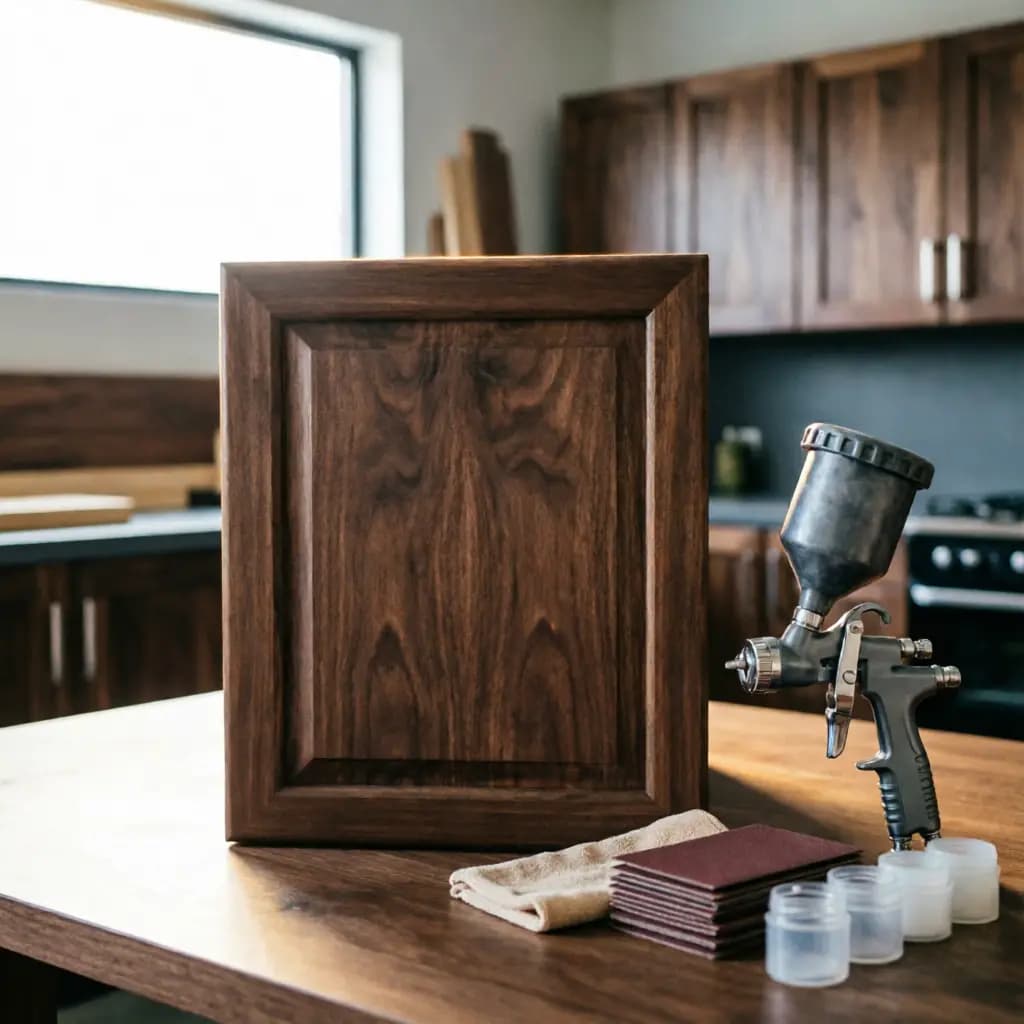
With low gloss—usually less than 10 gloss units (GU) at a 60-degree angle—matte wood finish reduces light reflection and the visibility of surface defects; semi-gloss and glossy finishes offer greater reflectivity and cleanability, respectively, while an opaque finish refers to the degree of coverage and obscuring of the substrate, not the level of gloss. Understanding these differences through the comprehensive wood-surface finishing course and following the standard principles of wood finishing enable more precise selection and application.
| Finish Type | Appearance | Suitable Application | Selection Note |
|---|---|---|---|
| Matte | Low reflectivity and a velvety appearance | Furniture, cabinets, and calm décor | Scratches and fingerprints are less noticeable |
| Semi-gloss | Balanced and more visible sheen | High-traffic surfaces and pieces requiring easy cleaning | A balance between decorative appeal and easy maintenance |
| Glossy | High light reflection and a brilliant surface | Feature pieces and dramatic styles | Irregularities and stains are more apparent |
| Opaque | Uniform color that conceals the texture | MDF, veneer, and low-grain woods | A clear finish is more suitable for preserving the natural texture |
The Aesthetic and Practical Benefits of Matte Polyurethane for Cabinets, Furniture, Doors, and Wooden Products
Matte polyurethane wood finish gives cabinets, furniture, doors, and wooden products a modern, natural appearance by reducing light reflection. Thanks to the polymeric structure of polyurethane, this finish offers suitable resistance to scratches, moisture, and stains; for greater durability, applying advanced protective wood finishes to a prepared, dry surface is recommended.
Examining Durability, Color Depth, Surface Uniformity, and Resistance to Scratches, Moisture, and Stains
The level of light reflection from wood surfaces in matte wood finish, by reducing distracting reflections, improves texture clarity and visual depth; however, resistance to scratches and moisture depends more on the resin type and dry-film thickness. In addition, reviewing the technical considerations in cabinet-door construction and applying the final layer uniformly helps prevent variations in matte level and stain absorption.
Choosing the Right Matte Finish Based on Wood Type, Décor Style, and Frequency of Use
Choosing a matte wood finish depends on the wood species, surface texture, décor style, and frequency of use. Before application, prepare the surface with 120- to 180-grit sandpaper and keep the wood moisture content between 8 and 12 percent. For heavily used pieces, choose a matte finish resistant to moisture and abrasion; the proper use of various wood shades and primers preserves the natural appearance of the grain and the durability of the structure.
Common Mistakes in Choosing the Color, Degree of Matting, and Expectations of the Final Finish
Ignoring the surface’s absorption level and the lighting conditions is a common mistake when choosing a matte wood finish. According to the principles of wood-finishing engineering, the final matte appearance depends not only on the porous texture of the substrate, but also on application uniformity and the angle of light; therefore, inspect the finish after it has fully dried, under the lighting of the actual location, using a test sample.
Professional Understanding of Matte Polyurethane and Proper Preparation of Wood Surfaces
Applying a non-glossy polyurethane matte wood finish requires precise surface preparation and uniform sanding with 180- to 220-grit paper. According to the standard principles of wood-surface preparation, remove dust completely and adjust the wood moisture content to between 8 and 12 percent before finishing; this reduces surface defects and stabilizes the adhesion of the final layer.
The Structure of Matte Polyurethane, Its Components, and the Role of Hardener, Thinner, and Matting Agent
Two-component polyurethane matte wood finish consists of polyol resin, isocyanate hardener, a compatible thinner, and silica matting particles. Based on the principles of wood-finishing engineering, this formulation creates suitable adhesion, mechanical resistance, uniform light diffusion, and desirable durability on wood when its components are mixed precisely and its pot life is observed.
The Difference Between Matte Polyurethane and Lacquer, Polyester, Acrylic, and Oil-Based Finishes
Once fully cured, polyurethane-based matte wood finish is more resistant to abrasion and moisture than lacquer and oil-based finishes; nevertheless, sealing the edges is essential for continuous contact with water. Compared with acrylic and polyester systems, the specialized formulation of coatings gives polyurethane greater flexibility, making it less likely to crack or peel with temperature fluctuations; polyester is generally harder but more brittle.
Examining Finish Compatibility with Natural Wood, MDF, Wood Veneer, Particleboard, and Previously Painted Surfaces
Matte wood finish can be applied to natural lumber, veneers, and various engineered woods, provided it is compatible with the underlying finish. For particleboard and MDF, sanding with 180- to 220-grit paper, removing dust, and applying a compatible primer are essential; previously painted surfaces must also be degreased, dulled, and tested for adhesion.
Preparation Steps Including Sanding, Puttying, Primer, Sealer, and the Removal of Grease and Dust
For uniform application of matte wood finish, first sand the surface with 180- to 220-grit paper, fill the joints with suitable putty, and, once dry, sand them flush again; then remove dust and grease with a lint-free cloth and suitable cleaner. Next, applying a standard primer and sealer according to the manufacturer’s instructions improves adhesion and ensures more uniform wood absorption.
Choosing Sandpaper Grit and Creating a Smooth, Uniform Surface Ready for Spraying
For preparing a matte wood finish, carefully selecting the right types of sandpaper with successive grits—typically P80, P120, and finally P180 or P220—is essential. Sanding along the wood grain creates a smooth, uniform surface for spraying. Then remove dust completely with a vacuum cleaner and lint-free cloth so that roughness and surface defects do not remain in the final finish.
Controlling Wood Moisture, Ambient Temperature, Ventilation, and Workshop Conditions Before Painting
Before applying matte wood finish, control the workshop environment. The moisture content of the piece should be between 8 and 12 percent as measured with a calibrated moisture meter; to understand the wood-drying process, note that a temperature of 20 to 25 degrees Celsius, relative humidity of 40 to 60 percent, and continuous ventilation are essential for adhesion and uniform drying of the layers.
Safety Equipment and Health Requirements When Working with Polyurethane Paints and Solvents
When applying matte wood finish and polyurethane coatings, review the SDS and use a suitable organic-vapor mask—or, when spraying isocyanates, an air-supplied respirator—along with chemically resistant gloves. Strictly following ventilation standards for workplaces and providing local exhaust ventilation reduces the buildup of solvent vapors; ventilation alone is not a substitute for personal protective equipment.
Step-by-Step Guide to Spraying Matte Wood Finish for a Professional, Uniform Result
For uniform application of matte wood finish, set the spray gun inlet pressure usually to 1.8 to 2 bar and test it on a sample piece before beginning. Spraying thin layers with approximately 50 percent overlap and observing flash-off time between layers prevents runs and streaks. When applying two-component formulations, attention to safety and respiratory protection principles is essential.
Choosing the Spray Gun, Nozzle, Compressor, and Air Pressure Settings for Matte Polyurethane
For uniform application of matte wood finish and polyurethane coatings, a gravity-feed spray gun with a 1.5- to 1.8-millimeter nozzle is suitable; set the inlet air pressure according to the technical data sheet and spray-gun type, usually between 1.8 and 2.5 bar. Following the standard principles of paint spraying, together with a compressor equipped with a water-and-oil separator, prevents bubbles and surface irregularities.
The Correct Ratio of Paint, Hardener, and Thinner and the Importance of Following the Manufacturer’s Instructions
When applying matte wood finish, the weight or volume ratio of paint to hardener—for example, 2:1—and the percentage of thinner, usually 5 to 15 percent, must be determined precisely according to the manufacturer’s catalog; incorrect mixing leads to incomplete curing and reduced durability. In addition, spraying at approximately 20 to 25 degrees Celsius and below 70 percent relative humidity, while following safety standards for spraying and workshop ventilation, is essential for operator health and fire prevention.
Thinning Methods to Prevent Runs, Orange Peel, Bubbles, Stains, and Surface Irregularities
For uniform application of matte wood finish, control viscosity according to the manufacturer’s data sheet using a No. 4 Ford cup; add the compatible thinner gradually. Understanding the characteristics of different wood finishes and varnishes helps with solvent selection and prevents runs, bubbles, orange peel, stains, and surface irregularities.
Proper Spray Gun Movement, Spraying Distance, Hand Speed, and Layer Overlap
When applying matte wood finish, keeping the spray gun 20 centimeters from the surface and moving it evenly and parallel to the surface reduces the likelihood of orange peel in the final finish.
Adjusting Layer Overlap
Fifty-percent overlap between each sprayed layer creates uniform thickness, a smooth surface, and consistent coverage over the workpiece.
The Application Sequence from Primer and Basecoat to the Final Matte Finish
Proper application of matte wood finish requires carefully following the layer sequence:
- Preparation and primer: Apply sealer to fill the pores, followed by light sanding with 320- to 400-grit paper.
- Basecoat: Create a uniform color and allow it to dry completely before applying the next layer.
- Final matte finish: Follow the standard principles of spray-gun application to achieve a uniform, durable surface.
Drying Time, Intercoat Intervals, and Methods for Preventing Dust from Settling on the Surface
Managing Drying Time and Workshop Conditions
For applying matte wood finish at 20 to 25 degrees Celsius and 50 to 60 percent relative humidity, typically allow 3 to 4 hours between layers of water-based coating; then, after complete drying, lightly sand with P320 to P400 paper. Match the exact timing to the manufacturer’s instructions. According to the standard principles of wood finishing, a clean environment with gentle, filtered ventilation prevents dust from settling; strong airflow has the opposite effect.
Troubleshooting Common Matte Paint Spraying Problems and Corrective Solutions
Stains, runs, or orange peel when applying matte wood finish usually result from incorrect nozzle and spray-gun pressure settings, spraying distance, or relative humidity above 60 percent. To correct these issues, after complete drying, intermediate sanding with 320- to 400-grit paper and observance of the standard principles of wooden furniture care will create a uniform surface.
Controlling the Degree of Matting and Achieving a Uniform, Velvety Surface with Consistent Light Reflection
To achieve a velvety, uniform surface with matte wood finish, keep the wet-film thickness constant according to the technical data sheet, usually 80 to 120 micrometers, and disperse the matting agents thoroughly for 3 to 5 minutes at medium speed. This control prevents shading and variations in reflectivity; however, resistance to ultraviolet-radiation degradation depends on the resin type, dry-film thickness, and stabilizing additives.
Maintaining, Cleaning, and Extending the Service Life of Matte Polyurethane Wood Surfaces
Proper Cleaning of Polyurethane Finishes
To care for matte wood finish, periodic cleaning with a damp microfiber cloth and a neutral cleaner (pH around 7) prevents the surface from becoming dull.
Extending the Service Life of Structures
- Avoid solvents, bleaches, and abrasive cleaners
- Prevent direct contact with sharp objects and do not drag items across the surface
- Reduce continuous, direct sunlight with curtains or a UV filter
Principles for Cleaning Matte Cabinets and Furniture Without Haze, Glossing, or Discoloration
To clean cabinets and furniture with matte wood finish without creating haze or glossy patches, use a soft, thoroughly wrung microfiber cloth and a neutral-pH cleaner (approximately 6 to 8). Apply the cleaner to the cloth first, not directly to the surface; abrasive, alcohol-based, or bleach-containing cleaners can damage the protective layer and color. Finally, dry the surface completely with a clean, dry cloth.
Suitable Cleaners and Materials That Should Not Be Used on Matte Wood Finish
Compatible Cleaners and Harmful Ingredients
For cleaning matte wood finish, lukewarm water and a mild cleaner with a near-neutral pH (6 to 8) are suitable. Alcohol, ammonia, acidic cleaners, and polishes can stain the finish or cause localized changes in sheen; test first on a concealed area. Use a microfiber cloth, not a rough scouring pad.
How to Remove Grease, Water Stains, Fingerprints, Ink, and Everyday Dirt
To remove grease and fingerprints from matte wood finish, use a slightly damp microfiber cloth and a very mild cleaner. For ink or water stains, gently apply a diluted neutral soap solution—one teaspoon in 250 milliliters of water—after spot-testing, and dry the area completely immediately afterward.
The Effects of Sunlight, Heat, Steam, Moisture, and Temperature Changes on Finish Longevity
Environmental Factors Affecting Finish Durability
Direct sunlight, heat above 60 degrees Celsius, steam, and high humidity can cause fading, chalking, and peeling of protective layers. Frequent temperature fluctuations also reduce adhesion; therefore, apply matte wood finish to a surface with moisture content below 18 percent, using a finish resistant to ultraviolet radiation and moisture.
Caring for Edges, Handles, Joints, and High-Traffic Areas
Edges and handles wear more quickly because of constant contact and friction. To care for matte wood finish, use a soft, dry, or slightly damp cloth and immediately remove moisture and grease from joints; abrasive materials will also damage the finish.
Repairing Scratches, Chips, and Surface Damage Without Color or Gloss Differences
To repair localized scratches and chips, first smooth and clean the area with fine 320- to 400-grit sandpaper. Then fill it with matching putty and, after drying, apply matte wood finish very thinly; test the color and gloss match on a concealed area.
A Periodic Maintenance Plan for Preserving a Luxurious Appearance, Matte Texture, and Finish Quality
To preserve the durability of matte wood finish and the natural appearance of wooden surfaces, regular cleaning and maintaining relative humidity between 40 and 60 percent are essential.
Key Care Principles
- Dust weekly with a slightly damp microfiber cloth using gentle pressure
- Avoid alcohol-based, acidic, alkaline, and abrasive-pad cleaners
- Use a finish-compatible wax annually after testing it in a concealed area
The Right Time to Restore or Reapply Matte Polyurethane Finish
The right time to restore matte wood finish with polyurethane is when the protective layer loses resistance or develops deep scratches. Signs include moisture penetration, localized wear, uneven dulling, and exposed wood; depending on usage and UV exposure, this condition typically occurs within three to five years.
Summary and Guide to Professionally Choosing and Applying Matte Wood Finish
Achieving a modern, durable appearance with matte wood finish requires precise surface preparation, progressive sanding with 120- to 180-grit paper, and complete dust removal. Applying 2 to 3 thin layers, allowing at least 24 hours of drying between layers, and keeping wood moisture below 15 percent creates a natural finish resistant to abrasion.
Checklist for Choosing Paint, Tools, Materials, and Suitable Project Conditions
Preparation Steps and Application Requirements
Before applying the final finish, especially matte wood finish, check the following:
- Material inspection: Confirm solvent and finish compatibility with the substrate and follow the mixing ratio specified on the product data sheet
- Suitable tools: 180- to 240-grit sandpaper and a completely clean spray gun with a nozzle suited to the finish
- Environmental conditions: A temperature of 15 to 30 degrees Celsius, relative humidity below 80 percent, and a dust-free space
Comparing Matte Polyurethane Application by a Professional with Workshop or Home Painting
The Difference Between Professional Skill and Home Painting
Applying matte wood finish with polyurethane requires suitable equipment and skill. A professional uses proper sanding, controls dust, and adjusts the dry thickness of each layer to approximately 50 to 80 micrometers to create a uniform, durable surface; however, home or workshop painting without adequate ventilation and tools usually results in runs, a rough surface, and reduced finish longevity.
Estimating the Factors Affecting Painting Costs, Material Consumption, and Project Duration
Estimating the cost, material consumption, and application time for matte wood finish depends on the following technical factors:
- Type of substrate preparation and wood species: Wood porosity and putty-work quality determine absorption and the number of sanding cycles required.
- Number of finish layers: A primer and two paint layers are usually required; coverage of 8 to 12 square meters per liter determines consumption.
- Ambient temperature: A temperature of 18 to 25 degrees Celsius and humidity below 65 percent make drying and final preparation time predictable.
Final Tips for Achieving a Durable, Uniform, Luxurious, and Washable Surface
For a uniform, durable surface with matte wood finish, sanding with 320- to 400-grit paper and removing dust after each layer has dried are essential. Applying 2 to 3 layers of clear polyurethane according to the manufacturer’s instructions increases resistance to moisture and washing while creating a uniform matte appearance.
Frequently Asked Questions About the Durability, Repair, Cleaning, and Discoloration of Matte Wood Finish
When properly applied and finished with a standard topcoat, matte wood finish offers suitable resistance to scratches and can be cleaned with a soft cloth and diluted cleaner. For guidance on maintaining wooden structures, contact our experienced specialists directly.
Frequently Asked Questions
What types of wood are suitable for matte polyurethane finish?
Matte polyurethane finish is suitable for all types of natural wood and wooden products such as MDF, cabinets, and wooden doors. In addition to creating a uniform matte appearance, this finish offers good resistance to moisture, scratches, and chemicals.
How should matte polyurethane be sprayed onto wood?
First, sand the wood surface thoroughly, clean it, and apply a suitable primer if necessary. Then thin the finish according to the manufacturer’s instructions and spray it in several thin layers with a spray gun in a dust-free environment.
How long does matte polyurethane take to dry?
Drying time depends on the product type, temperature, humidity, and layer thickness, but the surface typically dries within a few hours. To achieve final hardness and resistance, it is best to avoid using or heavily contacting the surface for several days.
How should a wood surface painted with matte finish be maintained?
Clean the surface with a soft, slightly damp cloth and avoid strong cleaners, rough scouring pads, and solvents. Prolonged contact with water, direct heat, and sharp objects should also be prevented.
Can matte polyurethane finish be repaired or recoated?
Yes. To repair it, first clean the surface and dull it with fine sandpaper to create suitable adhesion. After removing the dust, one or more thin layers of the same finish or a compatible product can be applied.